
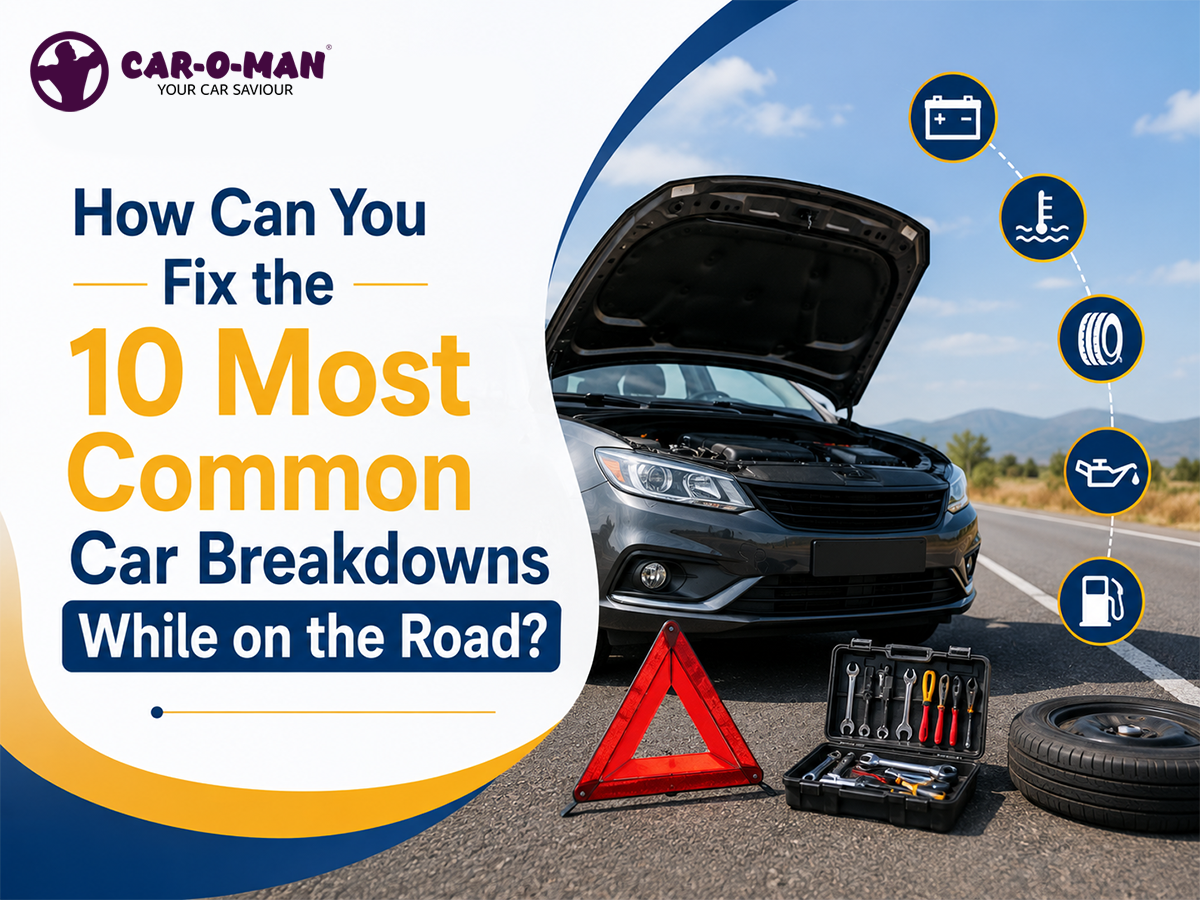
To address common car breakdowns, start by jump-starting a dead battery or changing a flat tire using the prescribed methods for safety and efficiency. Manage overheating by checking coolant levels and ensuring the radiator functions properly. Fix lighting issues by replacing burnt-out bulbs and examining electrical connections. For brake failures, cautiously apply the emergency brake and check for worn components. These initial steps offer practical solutions, yet further exploration reveals more thorough repairs and preventive techniques. If professional assistance is required, visiting a car service station in Hyderabad can help diagnose and resolve complex vehicle issues efficiently.
Dealing With a Dead Battery
When a car’s battery fails, it often leaves the driver stranded and frustrated. To prevent such situations, regular battery maintenance is vital. Ensuring the battery terminals are clean and tight can greatly prolong battery life. It is advisable to check the battery’s charge level every few months, especially before long trips. If a battery does die, knowing proper jump start techniques is essential. Always connect the red jumper cable to the positive terminal of the dead battery first, then to the donor battery. Next, attach the black cable to the donor battery’s negative terminal and the other end to an unpainted metal surface on the car with the dead battery. Start the donor vehicle, then attempt to start the other car.
Changing a Flat Tire
Experiencing a flat tire can disrupt a journey and require immediate attention. To address this efficiently, make sure you carry a well-maintained spare tire, a jack, and a lug wrench as part of your tire maintenance kit. Safely pull over to a flat surface, engage the parking brake, and place wheel wedges against the opposite tires. Remove the hubcap and loosen the lug nuts before lifting the vehicle with the jack. Replace the flat tire with the spare, tighten the lug nuts by hand, lower the vehicle, and then secure the nuts with the wrench. If the situation seems overwhelming, consider calling roadside assistance to guarantee safety and precision, thereby maintaining your freedom to travel without prolonged disruptions. Vehicle owners interested in old car restoration in Hyderabad should also ensure their spare tire and emergency tools are kept in good condition for safe travel.
Resolving Overheating Issues
After addressing a flat tire, motorists may also encounter engine overheating, a common yet serious issue. To resolve this, first, safely pull over and turn off the engine to prevent further damage. Check the coolant levels in the reservoir; low levels often indicate a leak or that it’s time for a refill. If the coolant is sufficient, proceed to examine the radiator for any blockages or leaks. Verify the radiator cap is secure and intact, as a faulty cap can cause pressure loss and lead to overheating. Regular radiator checks and maintaining proper coolant levels are essential. If these steps do not cool the engine, it may require professional inspection to diagnose and remedy more complex issues like a malfunctioning thermostat or water pump.
Fixing Headlight and Taillight Problems
Addressing malfunctioning headlights and taillights is essential for guaranteeing vehicle safety and compliance with traffic laws. For headlight replacement, first verify the vehicle is off and the headlamp assembly is cool. Locate the headlight holder, and remove the power connector and retaining ring. Replace the old bulb with a new one, handling it by its base to avoid contaminating the glass. Reassemble in reverse order. For taillight troubleshooting, inspect the fuse associated with the taillights. If the fuse is blown, replace it. Check the bulb as well; if it appears dark or broken, replace it. These steps not only restore functionality but also empower drivers to maintain their vehicle’s safety features independently, enhancing their sense of freedom on the road. Vehicle owners seeking turbocharger repair in Hyderabad should also ensure that all essential vehicle systems, including lighting, are regularly inspected for safe driving.
Addressing Brake Failures
When brake failures occur, immediate action is critical to confirm driver safety and vehicle control. First, try to engage the emergency brake gently to avoid skidding. If this proves ineffective, downshift gradually to a lower gear to help slow the vehicle using engine braking. Finding a safe route to a controlled stop, away from traffic, is paramount. Once stopped, a thorough brake inspection is necessary to identify the root cause, which could range from worn brake pads to hydraulic fluid leaks. Addressing brake failures promptly not only confirms your freedom to travel but also prevents potential accidents. Always consult a professional mechanic if the issue is beyond basic troubleshooting, emphasizing the importance of regular maintenance to avoid such dangerous situations.
Troubleshooting Starter Motor Issues
Why does your car fail to start even when you turn the key? Often, the culprit is the starter motor, which is vital for igniting the engine. Conducting starter motor diagnostics can pinpoint the issue. First, check the battery’s charge and connections as they directly impact the starter. If these are functional, the problem might lie with the starter motor or relay. Listen for a clicking sound when starting the car; this can indicate a faulty starter relay. Replacing the starter relay is a straightforward solution that restores your vehicle’s independence and guarantees reliability. If the starter motor itself is defective, evaluating its electrical connections and confirming it’s receiving adequate power are critical steps before considering replacement.
Handling a Broken Fan Belt
If your vehicle’s fan belt snaps, immediate attention is required to prevent further engine damage. First, safely pull over and turn off the engine. Identify the broken belt by inspecting the front of the engine block where various belts are visible. A snapped belt will be loose or absent. Fan belt replacement is vital here; carry a spare fan belt and basic tools (wrenches and screwdrivers) in your vehicle for such emergencies. Loosen the tensioner pulley, remove the damaged belt, and replace it with the new one, ensuring it fits snugly over the pulleys. Proper fan belt maintenance includes regular inspections and immediate replacement of worn or aged belts to uphold your freedom to travel without unexpected interruptions.
Rescuing a Stuck Ignition Key
A stuck ignition key can immobilize a vehicle as effectively as a mechanical failure. When confronted with a key stubbornly lodged in the ignition lock, a strategic approach is required for successful key extraction without damaging the ignition system. Initially, verify the vehicle is in “park” or “neutral” and that the steering wheel isn’t locked against its stop, as this pressure can bind the key. Gently wiggling the steering wheel while simultaneously turning the key can relieve this tension. If the key remains stuck, applying a specialized lubricant like graphite to the ignition lock can facilitate its release. Avoid using excessive force, which can exacerbate the issue. If these steps fail, a professional locksmith’s expertise may be necessary to resolve the situation and regain your freedom on the road.
Solving Fuel Problems
Diagnosing and resolving fuel problems in a vehicle requires a systematic approach to identify and address issues ranging from clogged fuel filters to contaminated fuel. Initially, scrutinize the fuel filter, a frequent culprit in fuel delivery problems. A clogged filter restricts flow, diminishing engine performance. Replacing a dirty filter can quickly restore function and freedom to your travel.
Next, assess the fuel pump, crucial for transferring fuel from the tank to the engine. Symptoms of a failing fuel pump include sputtering at high speeds or a vehicle that refuses to start. Testing fuel pressure with a gauge can confirm pump issues. If contaminated fuel is suspected, draining the tank and adding fresh fuel, along with replacing the fuel filter, often resolves this problem effectively.
Repairing Electrical Failures
Many vehicle malfunctions stem from electrical failures, which can range from simple blown fuses to complex issues within the wiring harness. Diagnosing electrical issues requires a systematic approach. Start by inspecting the fuse box; replacing fuses is straightforward and can resolve many problems. If the issue persists, use a multimeter to check for voltage discrepancies along the wiring. This tool helps pinpoint areas where electrical flow is compromised. When tackling more intricate electrical failures, it may be necessary to consult wiring diagrams specific to your vehicle model. These diagrams provide essential insights for tracing faults. Always verify the vehicle is turned off and disconnected from any power source before attempting repairs, safeguarding both your safety and the vehicle’s electrical integrity.